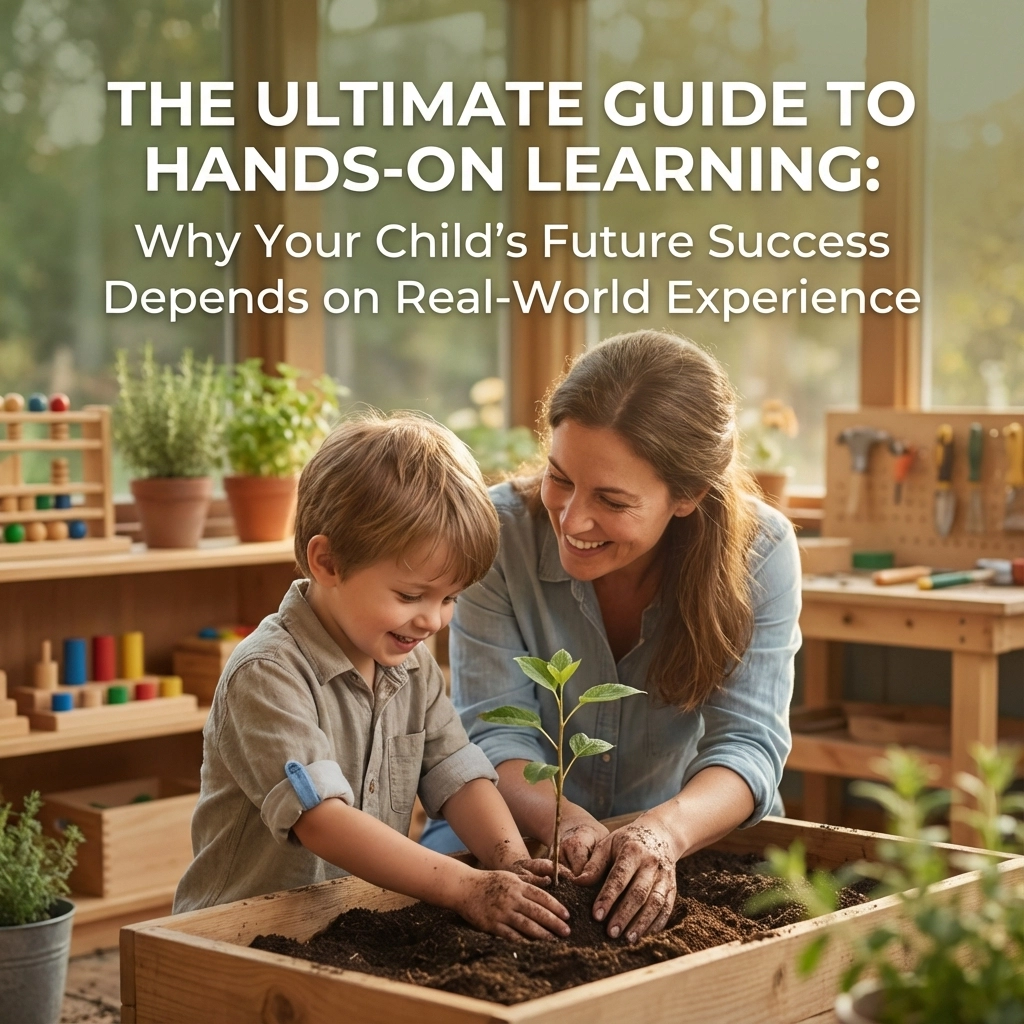
As parents in today's rapidly evolving world, you're likely wondering how to best prepare your child for a future that looks dramatically different from your own childhood. The answer isn't found in more screen time or traditional textbook learning: it's discovered through hands-on, experiential education that mirrors real-world challenges and opportunities.
In an era where artificial intelligence handles routine tasks and automation reshapes entire industries, children who master practical problem-solving, creativity, and adaptability will thrive. These skills aren't developed through passive consumption of information. Instead, they emerge when children roll up their sleeves, tackle real projects, and learn through direct experience.
This comprehensive guide explores why hands-on learning represents the cornerstone of your child's future success. You'll discover research-backed insights, practical implementation strategies, and actionable steps to transform your child's education into a launching pad for lifelong achievement.
Chapter 1: The Science Behind Hands-On Learning
How the Brain Processes Experiential Learning
Research from the University of Chicago reveals that students engaging in hands-on learning approaches show significantly more brain activation in sensory and motor-related regions compared to traditional passive learning methods. When children manipulate objects, conduct experiments, or build projects, they activate multiple neural pathways simultaneously.
This multisensory engagement creates what neuroscientists call "embodied cognition": the process where physical actions strengthen cognitive understanding. Brain imaging studies demonstrate that children who learn through hands-on activities develop stronger neural connections between regions responsible for memory, creativity, and problem-solving.
The National Training Laboratories' research shows striking differences in retention rates:
- Lecture-based learning: 5% retention
- Reading: 10% retention
- Audiovisual: 20% retention
- Demonstration: 30% retention
- Practice by doing: 75% retention
- Teaching others/immediate application: 90% retention
These statistics reveal why children who engage in hands-on learning consistently outperform their peers in both academic assessments and real-world problem-solving scenarios.
The Neuroplasticity Advantage
During childhood and adolescence, the brain exhibits remarkable neuroplasticity: the ability to reorganize and form new neural connections. Hands-on learning leverages this critical developmental window by providing rich, multisensory experiences that shape cognitive architecture.
When children engage in tactile learning experiences, they strengthen connections between the prefrontal cortex (responsible for executive function) and the motor cortex (controlling physical movement). This integration enhances their ability to translate abstract concepts into concrete actions: a skill essential for entrepreneurship, innovation, and leadership.
Memory Formation and Retrieval
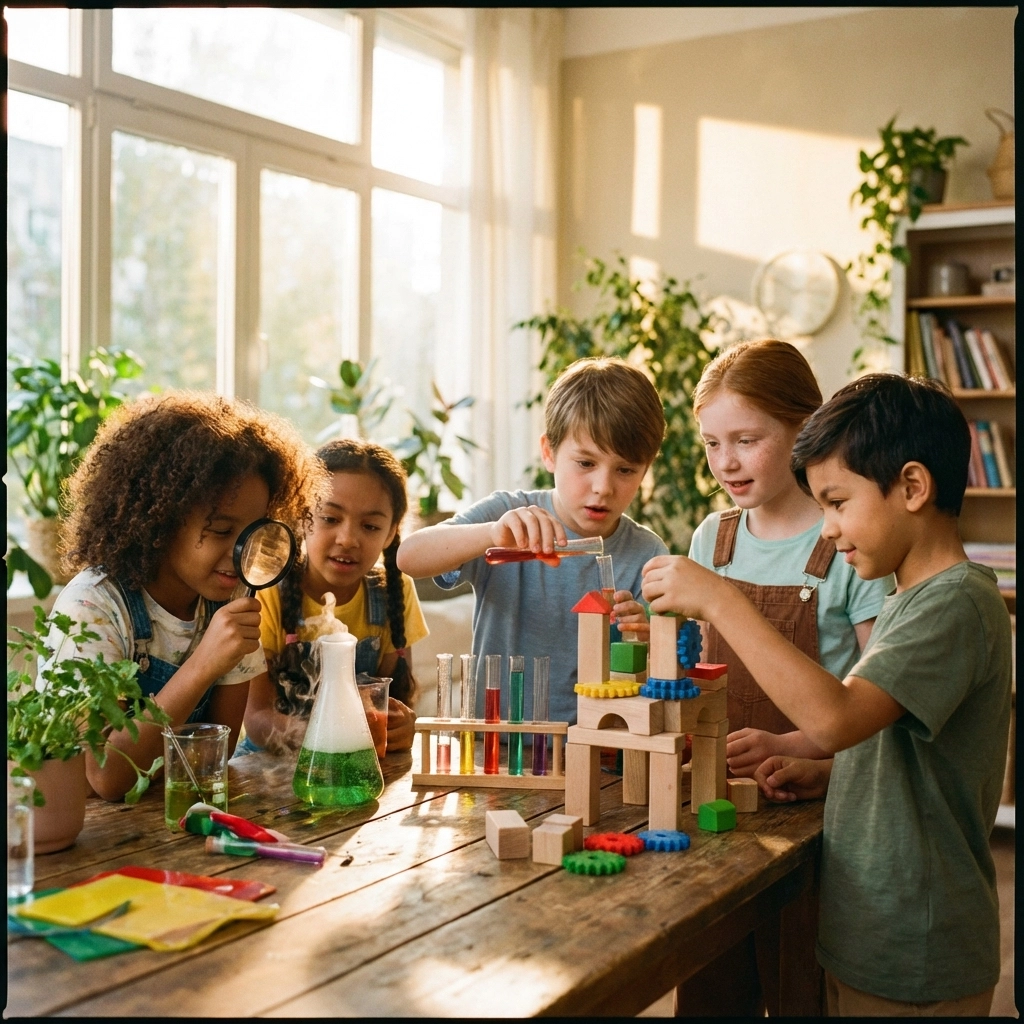
Experiential learning creates what psychologists term "episodic memories": rich, contextual memories tied to specific experiences, emotions, and sensations. Unlike semantic memories (facts and concepts), episodic memories remain vivid and accessible throughout life.
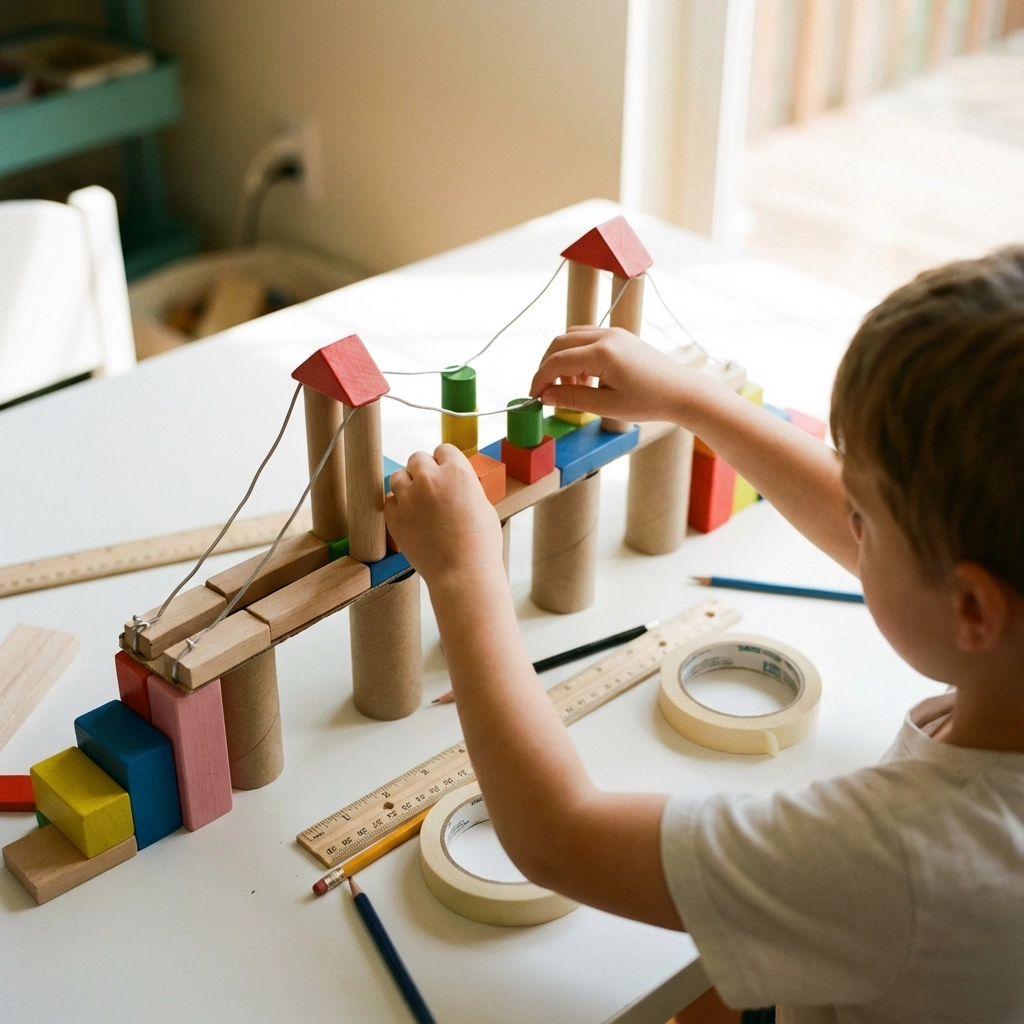
When your child builds a bridge from recyclable materials, they don't just learn about engineering principles: they create a memorable experience linking physics concepts with creative problem-solving, teamwork, and the satisfaction of overcoming challenges. Years later, they'll recall not just the lesson but the entire learning experience.
Chapter 2: Cognitive Development Through Real-World Experience
Executive Function Enhancement
Executive function encompasses the mental skills that include working memory, flexible thinking, and self-control. These skills, more than IQ or academic knowledge, predict success in school, career, and life. Hands-on learning activities naturally develop executive function through:
Planning and Organization: Project-based learning requires children to break complex tasks into manageable steps, allocate resources, and manage timelines. Whether they're organizing a mini business venture or conducting a science experiment, they practice essential project management skills.
Working Memory Development: Hands-on activities require children to hold multiple pieces of information in mind while manipulating variables. Building a robot, for instance, demands remembering programming sequences while considering mechanical constraints and aesthetic choices.
Cognitive Flexibility: Real-world problems rarely have single solutions. Experiential learning exposes children to scenarios requiring adaptability and creative thinking. When their initial approach doesn't work, they learn to pivot, adjust strategies, and explore alternative solutions.
Critical Thinking and Problem-Solving
Traditional education often presents problems with predetermined solutions and step-by-step instructions. However, real-world challenges are messy, ambiguous, and multifaceted. Hands-on learning prepares children for this reality by presenting authentic problems requiring original thinking.
Consider the difference between learning about supply and demand through a textbook versus running a lemonade stand. The textbook provides abstract concepts, while the lemonade stand reveals how weather, location, pricing, and customer preferences interact in complex ways. Children learn to observe patterns, test hypotheses, and adjust strategies based on real feedback.
Spatial Intelligence Development
Spatial intelligence: the ability to visualize and manipulate objects in three-dimensional space: strongly correlates with success in STEM fields, architecture, and creative industries. Hands-on activities involving building, crafting, and construction naturally develop spatial awareness.
Research from Vanderbilt University demonstrates that children with strong spatial skills in elementary school are more likely to pursue STEM careers and demonstrate higher levels of creativity and innovation throughout their academic and professional lives.
Chapter 3: Social and Emotional Learning Through Experience
Building Emotional Resilience
Hands-on learning inherently involves trial and error, failure and success. These experiences teach children that setbacks are temporary and surmountable. Unlike traditional academic settings where mistakes often result in poor grades, experiential learning reframes failure as valuable feedback.
When children's initial designs don't work or their business ideas need refinement, they learn emotional regulation, persistence, and growth mindset thinking. These emotional skills prove far more predictive of long-term success than academic achievement alone.
Collaboration and Communication Skills
Most hands-on learning activities involve teamwork, requiring children to communicate ideas, negotiate different perspectives, and work toward common goals. These collaborative experiences develop essential social skills including:
Active Listening: Understanding teammates' ideas and building upon them
Conflict Resolution: Managing disagreements and finding win-win solutions
Leadership: Taking initiative and inspiring others toward shared objectives
Empathy: Understanding different perspectives and working styles
Research from Harvard's Making Caring Common project reveals that children who regularly engage in collaborative hands-on activities demonstrate higher levels of empathy and social awareness compared to their peers.
Self-Efficacy and Confidence Building
Self-efficacy: belief in one's ability to influence events affecting their life: represents a crucial predictor of success and well-being. Hands-on learning builds self-efficacy by providing children with concrete evidence of their capabilities.
When children successfully complete challenging projects, solve real problems, or create something meaningful, they develop confidence in their abilities. This confidence generalizes to new situations, making children more likely to take on challenges, persist through difficulties, and achieve ambitious goals.
Chapter 4: Academic Performance and Real-World Learning
Enhanced Subject Matter Comprehension
Hands-on learning transforms abstract academic concepts into concrete, understandable experiences. Mathematical principles become clear through architectural projects. Scientific theories gain meaning through experimentation. Historical events become relevant through role-playing and simulation activities.
Studies from the University of Washington demonstrate that students who learn academic subjects through hands-on activities score 12-18% higher on standardized tests compared to students receiving traditional instruction. More importantly, they demonstrate deeper conceptual understanding and better transfer of knowledge to novel situations.
Cross-Curricular Integration
Real-world problems don't fit neatly into academic subjects: they require integrated knowledge from multiple disciplines. Hands-on learning naturally promotes cross-curricular thinking by presenting authentic challenges requiring diverse skills and knowledge.
For example, starting a small business incorporates:
- Mathematics: Budgeting, profit calculation, data analysis
- Language arts: Marketing copy, customer communication, presentations
- Social studies: Understanding market dynamics, consumer behavior
- Science: Product development, quality control
- Arts: Design, branding, visual communication
This integration mirrors real-world work environments where professionals regularly draw from multiple knowledge domains to solve complex problems.
Long-Term Academic Motivation
Traditional academic approaches often rely on external motivators like grades, rewards, or consequences. Hands-on learning taps into intrinsic motivation by connecting learning to children's natural curiosity and desire for competence.
When children see direct connections between their learning and meaningful outcomes, they develop lasting motivation for education. Research from Self-Determination Theory demonstrates that intrinsically motivated learners achieve higher levels of academic success and maintain motivation throughout their educational journey.
Chapter 5: Future-Ready Skills Development
Digital Literacy and Technology Integration
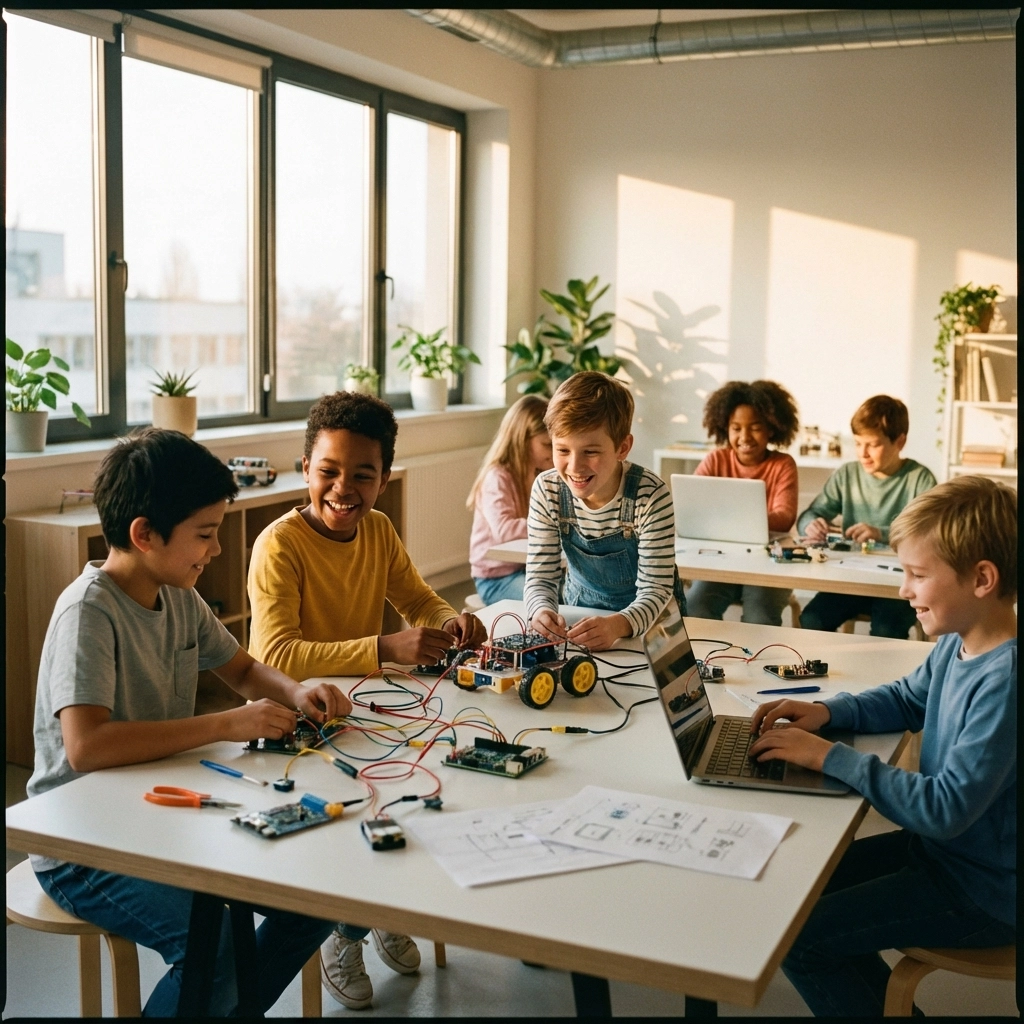
Contrary to concerns that hands-on learning might diminish technological fluency, research shows the opposite effect. Children who engage in maker-based activities, robotics projects, and digital creation demonstrate higher levels of technological literacy than passive technology consumers.
Hands-on technology learning teaches children to be creators rather than consumers. They learn programming through building games or apps. They understand electronics through circuit projects. They develop digital design skills through 3D modeling and printing.
Entrepreneurial Mindset Development
The entrepreneurial mindset encompasses opportunity recognition, creative problem-solving, calculated risk-taking, and value creation. These skills prove valuable regardless of career path: from corporate leadership to nonprofit management to artistic endeavors.
Hands-on learning naturally develops entrepreneurial thinking by:
Encouraging Opportunity Recognition: Children learn to identify problems and envision solutions
Promoting Resource Optimization: Working with limited materials teaches efficiency and creativity
Building Risk Assessment Skills: Projects involve calculated risks and learning from outcomes
Fostering Innovation: Open-ended challenges encourage original thinking and creative solutions
Adaptability and Continuous Learning
The World Economic Forum's Future of Jobs Report identifies adaptability and continuous learning as the most crucial skills for future career success. As industries evolve rapidly, professionals must continuously acquire new skills and adapt to changing conditions.
Hands-on learning inherently teaches adaptability by presenting unpredictable challenges requiring flexible responses. Children learn that knowledge is not static: it must be applied, tested, and updated based on new information and changing circumstances.
Chapter 6: Learning Styles and Individual Differences
Kinesthetic Learners Thrive
Traditional educational approaches heavily favor auditory and visual learners, often leaving kinesthetic learners: those who learn best through physical movement and manipulation: at a disadvantage. Hands-on learning levels the playing field by incorporating physical activity into the learning process.
Research indicates that approximately 30-40% of students demonstrate kinesthetic learning preferences. These children often struggle in traditional classroom environments but excel when given opportunities to learn through doing, building, and moving.
Multiple Intelligence Theory Application
Harvard psychologist Howard Gardner's theory of multiple intelligences identifies eight distinct types of intelligence:
- Linguistic Intelligence: Word-based learning
- Logical-Mathematical Intelligence: Number-based learning
- Spatial Intelligence: Visual-spatial learning
- Bodily-Kinesthetic Intelligence: Physical learning
- Musical Intelligence: Rhythm and sound-based learning
- Interpersonal Intelligence: Social learning
- Intrapersonal Intelligence: Self-reflective learning
- Naturalist Intelligence: Nature-based learning
Hands-on learning activities can incorporate multiple intelligences simultaneously, ensuring that children with different cognitive strengths can access and excel in their education.
Inclusive Learning Environments
Experiential learning creates more inclusive educational environments by providing multiple pathways to understanding and demonstration of knowledge. Children with learning differences, attention challenges, or different cultural backgrounds often find greater success in hands-on learning environments.
These approaches reduce reliance on standardized testing and written assessments, allowing children to demonstrate their understanding through projects, presentations, and practical applications.
Chapter 7: Implementation Strategies for Parents
Creating Learning-Rich Home Environments
Transforming your home into a hands-on learning environment doesn't require extensive resources or dramatic changes. Small modifications can create powerful learning opportunities:
Designate Creation Spaces: Establish areas where children can work on projects without worrying about mess. This might be a corner of the garage, basement workspace, or even a portable learning cart that can be set up anywhere.
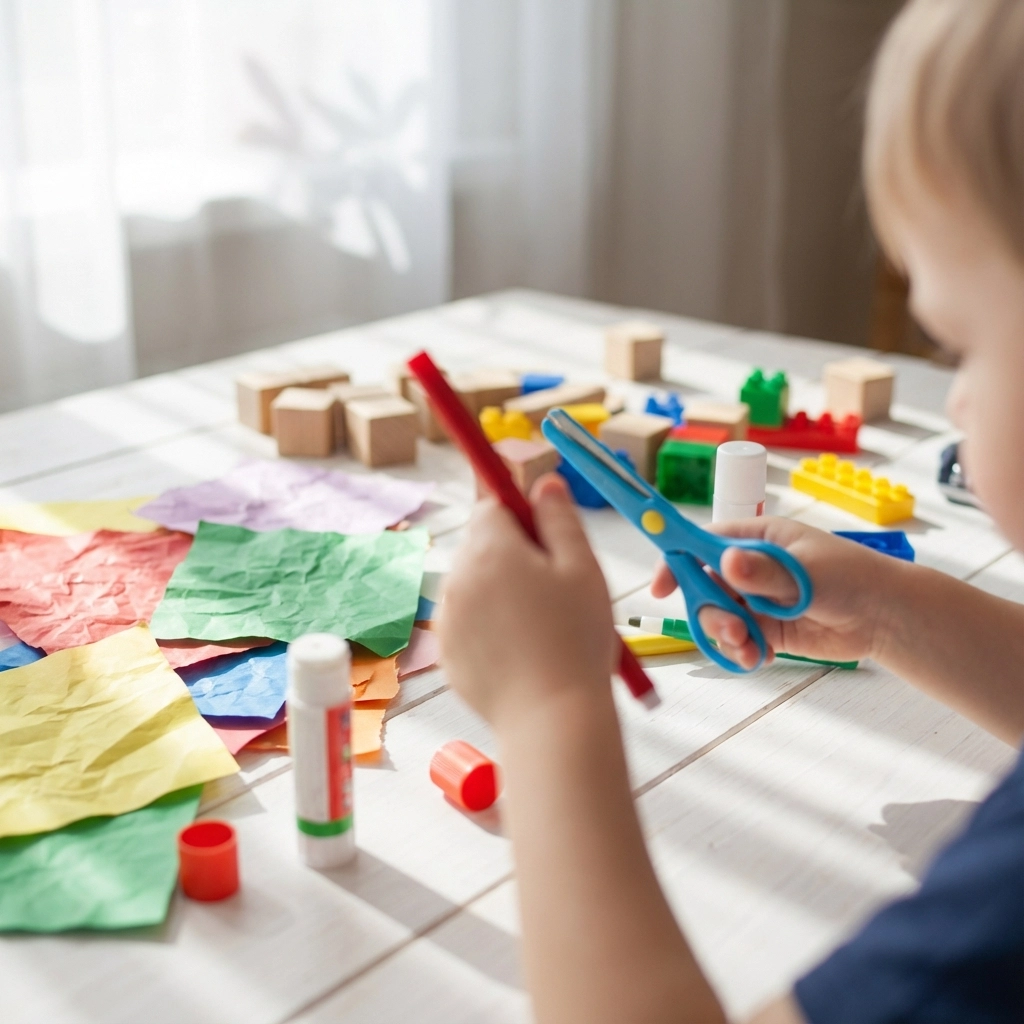
Stock Basic Materials: Keep supplies like cardboard, tape, scissors, art materials, and basic tools accessible. Children are more likely to engage in spontaneous learning when materials are readily available.
Encourage Tinkering: Allow children to disassemble old electronics, explore how things work, and experiment with materials. Supervised exploration teaches valuable lessons about design, engineering, and problem-solving.
Daily Life Learning Opportunities
Every household activity presents potential learning experiences:
Cooking: Measuring ingredients teaches fractions and ratios. Following recipes develops reading comprehension and sequencing skills. Understanding nutrition connects to biology and health science.
Garden Projects: Planting and maintaining gardens teaches biology, environmental science, and responsibility. Children learn about life cycles, ecosystems, and sustainable practices.
Home Improvement: Simple projects like painting, organizing, or basic repairs teach measurement, planning, and practical skills while contributing to family life.
Financial Management: Involving children in budgeting, comparison shopping, and financial planning develops mathematical skills and real-world financial literacy.
Technology Integration at Home
Balance screen-based and hands-on activities by using technology as a tool for creation rather than consumption:
Digital Maker Projects: Encourage children to create videos, podcasts, websites, or apps rather than simply consuming digital content.
Online Learning Communities: Connect with other families engaged in hands-on learning through online forums, social media groups, and virtual maker spaces.
Documentation and Reflection: Use digital tools to document learning journeys, reflect on projects, and share accomplishments with extended family or learning communities.
Chapter 8: Choosing Quality Hands-On Learning Programs
Evaluating Program Quality
When selecting external learning programs, consider these quality indicators:
Project-Based Curriculum: Programs should center around meaningful projects that integrate multiple skills and knowledge areas rather than isolated activities or crafts.
Real-World Applications: Look for programs that connect learning to authentic problems and applications rather than artificial or contrived scenarios.
Student Choice and Voice: Quality programs provide children with choices about their learning path and encourage them to pursue their interests and passions.
Reflection and Iteration: Effective programs include time for reflection, revision, and improvement rather than simply moving from one activity to the next.
Qualified Instructors: Instructors should have both content expertise and understanding of child development, learning theory, and project-based pedagogy.
Program Types and Options
Various program formats can provide hands-on learning experiences:
After-School Programs: Regularly scheduled programs that complement traditional schooling with experiential learning opportunities.
Summer Camps: Intensive programs that allow for deeper project exploration and skill development during extended time periods.
Weekend Workshops: Short-term programs focusing on specific skills or topics, allowing children to explore various interests.
Maker Spaces: Community-based facilities providing access to tools, materials, and instruction for hands-on projects.
Online/Hybrid Programs: Blended approaches combining online instruction with at-home hands-on activities and virtual collaboration.
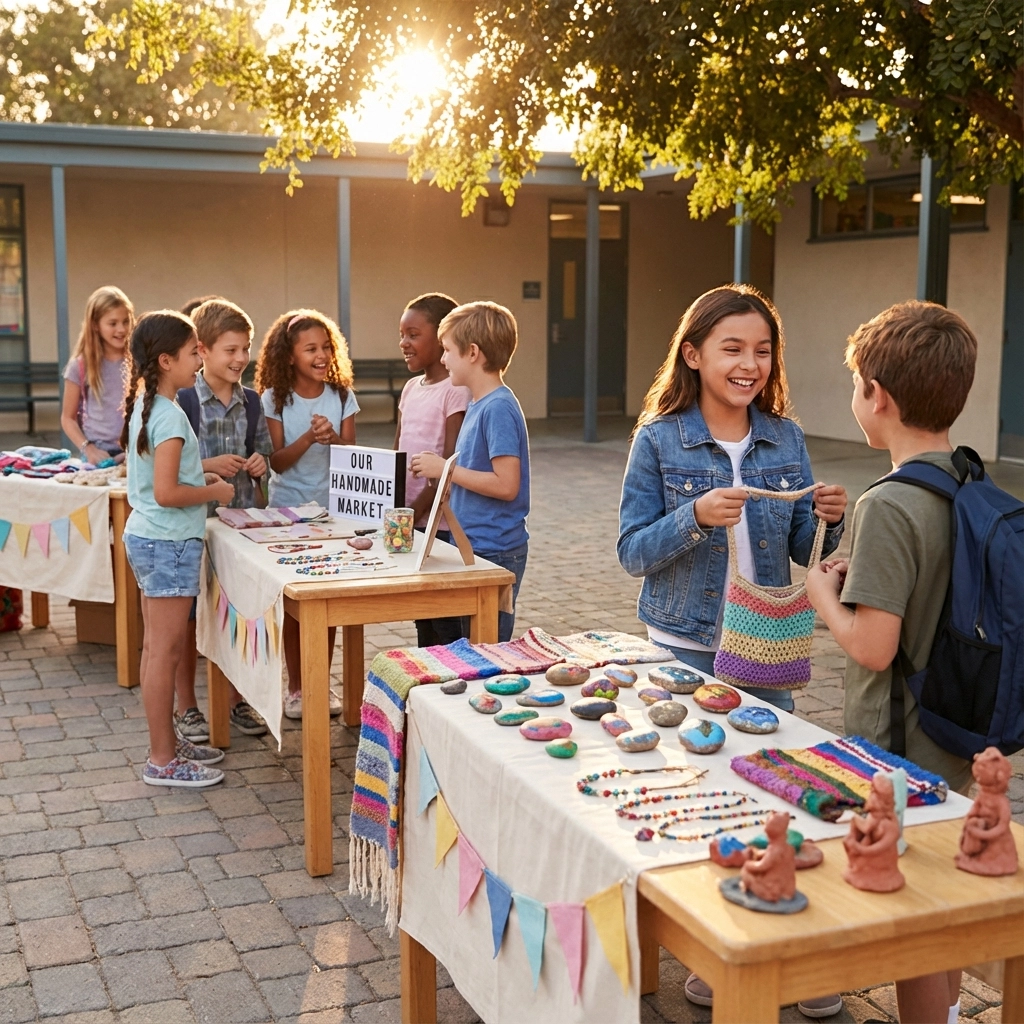
At Ignite Academy, our programs specifically focus on developing entrepreneurial thinking and business skills through hands-on projects that mirror real-world business challenges. Children work on authentic projects like creating and marketing products, developing business plans, and solving community problems through innovative thinking.
Age-Appropriate Program Selection
Different age groups benefit from different types of hands-on learning experiences:
Ages 8-10: Focus on exploration, basic skill development, and creative expression. Programs should emphasize fun, discovery, and building confidence through achievable challenges.
Ages 10-12: Introduce more complex projects requiring planning, collaboration, and sustained effort. Children this age can handle increased responsibility and longer-term commitments.
Ages 12+: Incorporate leadership opportunities, community connections, and preparation for real-world application of skills.
Chapter 9: Common Implementation Mistakes and Solutions
Mistake 1: Over-Structuring Activities
Many parents and educators make the mistake of providing excessive structure and predetermined outcomes for hands-on activities. While some guidance is necessary, over-structuring eliminates the exploration and creative problem-solving that make experiential learning valuable.
Solution: Provide scaffolding and support while allowing children freedom to explore different approaches and solutions. Focus on guiding the learning process rather than dictating specific outcomes.
Mistake 2: Focusing Solely on End Products
Another common mistake involves emphasizing final products over learning processes. While celebrating completed projects is important, the learning occurs through exploration, experimentation, and problem-solving rather than perfect final products.
Solution: Ask questions about children's thinking processes, decision-making, and problem-solving strategies. Celebrate learning and growth rather than just polished final products.
Mistake 3: Insufficient Challenge
Sometimes parents or educators provide activities that are too easy, failing to challenge children to stretch their abilities and develop new skills. Unchallenging activities may be fun but don't promote significant learning or growth.
Solution: Observe children's skill levels and gradually increase challenge levels. Provide support when needed while maintaining appropriate challenge to promote learning and development.
Mistake 4: Neglecting Reflection
Hands-on activities without reflection miss crucial learning opportunities. The experience itself is valuable, but deep learning occurs when children reflect on their experiences, consider what they learned, and think about how to apply their knowledge in new situations.
Solution: Build regular reflection time into hands-on learning experiences. Use questions, journaling, or discussion to help children process their experiences and extract key learnings.
Chapter 10: Measuring Success in Hands-On Learning
Beyond Traditional Metrics
Traditional academic measures like test scores and grades provide limited insight into hands-on learning effectiveness. More meaningful measures include:
Problem-Solving Growth: Observe how children approach new challenges. Do they demonstrate increased confidence, persistence, and creativity over time?
Collaboration Skills: Notice improvements in communication, teamwork, and leadership abilities during group projects and activities.
Transfer of Learning: Look for evidence that children apply skills and knowledge learned through hands-on activities to new situations and contexts.
Intrinsic Motivation: Monitor children's enthusiasm for learning, willingness to take on challenges, and persistence through difficulties.
Portfolio-Based Assessment
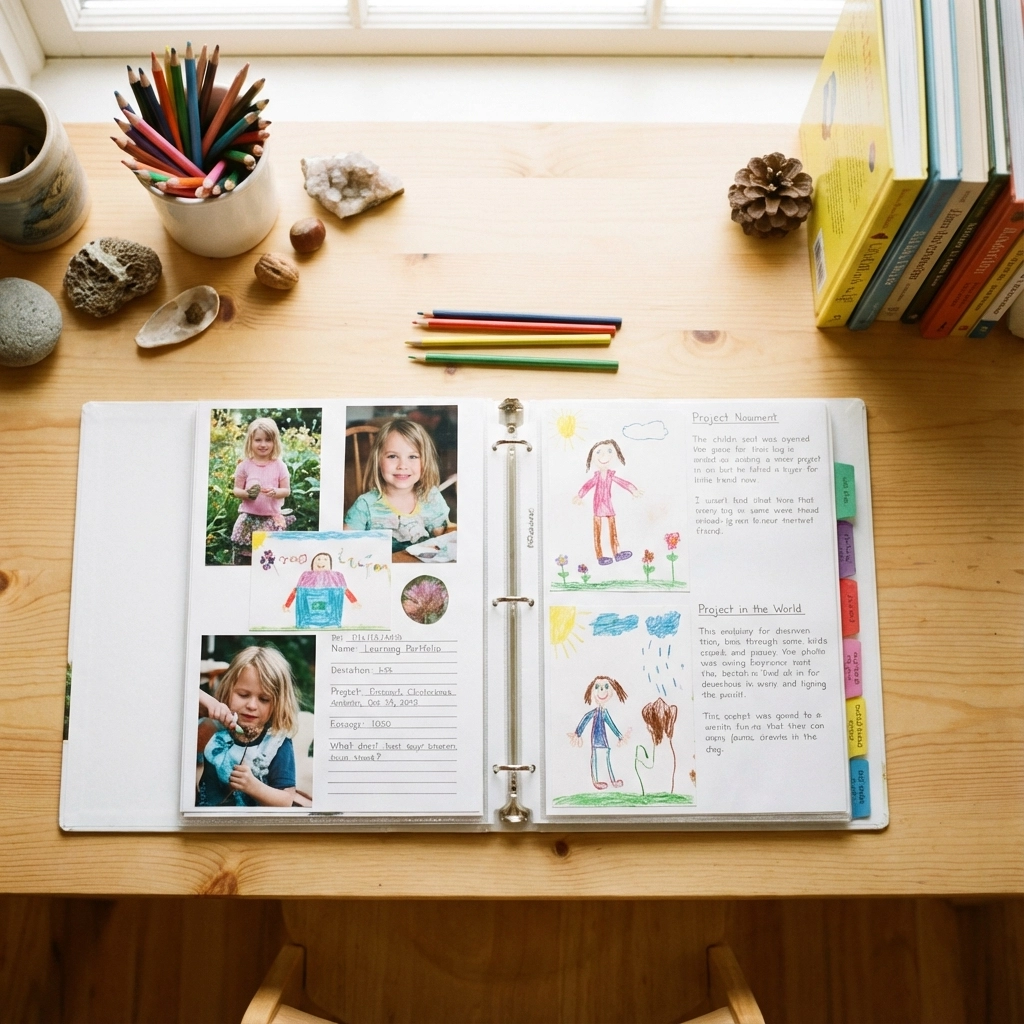
Create learning portfolios documenting children's hands-on learning journeys:
Project Documentation: Photos, videos, and written descriptions of projects and learning processes.
Reflection Artifacts: Journal entries, self-assessments, and reflections on learning experiences.
Skill Development Evidence: Examples showing growth in specific skills over time.
Goal Setting and Achievement: Documentation of learning goals and evidence of progress toward achieving them.
Long-Term Success Indicators
The true measure of hands-on learning success appears in long-term indicators:
Academic Engagement: Children who engage in quality hands-on learning often demonstrate increased engagement and success in traditional academic subjects.
Social Skills Development: Improved collaboration, communication, and leadership abilities that transfer to multiple contexts.
Creative Confidence: Willingness to tackle creative challenges and generate original solutions to problems.
Growth Mindset: Belief that abilities can be developed through effort, practice, and learning from failures.
Chapter 11: Toronto-Specific Resources and Opportunities
Local Maker Spaces and Community Resources
Toronto offers numerous resources for families seeking hands-on learning opportunities:
Toronto Public Library Maker Spaces: Many TPL locations offer maker spaces with 3D printers, computer programming resources, and workshop programs for children.
Ontario Science Centre: Provides hands-on science programs, camps, and family learning opportunities throughout the year.
Harbourfront Centre: Offers arts-based hands-on learning programs including craft workshops, performance opportunities, and creative skill development.
Local Community Centres: Many Toronto community centres provide programming that incorporates hands-on learning approaches.
School Board Initiatives
Both the Toronto District School Board (TDSB) and Toronto Catholic District School Board (TCDSB) have initiatives supporting hands-on learning:
TDSB Innovation Labs: Many schools now include innovation labs or maker spaces where students engage in project-based learning and creative problem-solving.
TCDSB STEAM Programs: Science, Technology, Engineering, Arts, and Mathematics programs that integrate hands-on learning across curriculum areas.
Private Program Options
For families seeking additional hands-on learning opportunities, Toronto offers various private programs:
Ignite Academy: Specializes in entrepreneurship education through hands-on business projects and real-world learning experiences. Our academic programs focus specifically on developing business skills, leadership abilities, and innovative thinking through experiential learning approaches.
Local Art Studios: Many offer children's programs focusing on creative skill development and artistic expression.
Coding Bootcamps: Programs teaching programming and digital creation skills through project-based learning approaches.
Chapter 12: Supporting Different Learning Needs
Accommodating Learning Differences
Hands-on learning can be particularly beneficial for children with learning differences, but requires thoughtful adaptation:
ADHD Considerations: Provide clear structure within flexible formats. Allow for movement and hands-on manipulation while maintaining focus on learning objectives.
Autism Spectrum Considerations: Offer predictable routines within project-based learning. Provide clear expectations and support for social interaction components.
Learning Disabilities: Use hands-on approaches to bypass traditional academic challenges while building strengths and confidence.
Gifted and Talented Learners
Advanced learners benefit from hands-on learning that provides appropriate challenge and complexity:
Open-Ended Projects: Provide projects with multiple solution paths and opportunities for deep exploration.
Leadership Opportunities: Allow advanced learners to take leadership roles in collaborative projects.
Real-World Applications: Connect learning to authentic problems and professional applications.
English Language Learners
Hands-on learning supports English language development by providing:
Contextual Learning: Physical activities and visual cues support language understanding and development.
Social Interaction: Collaborative projects provide natural opportunities for language practice and development.
Cultural Bridge-Building: Hands-on projects can incorporate cultural knowledge and experiences from diverse backgrounds.
Chapter 13: Building a Learning Community
Connecting with Other Families
Creating networks with other families committed to hands-on learning enhances the experience for everyone:
Organize Learning Groups: Form groups of families who meet regularly for collaborative projects and shared learning experiences.
Resource Sharing: Pool resources, tools, and expertise to create richer learning opportunities.
Skill Exchanges: Parents and family members can share expertise by teaching workshops or leading projects in their areas of strength.
Engaging Extended Family and Community
Expand children's learning community beyond immediate family:
Grandparent Involvement: Engage grandparents and extended family members in sharing traditional skills, life experiences, and cultural knowledge.
Professional Connections: Connect children with family friends and community members working in fields of interest.
Community Service Projects: Engage in hands-on learning through community service and civic engagement activities.
Digital Learning Communities
Online platforms can extend and enhance local learning communities:
Project Sharing Platforms: Use online platforms to share projects, get feedback, and connect with other young learners.
Virtual Collaboration: Participate in online collaborative projects with children from other communities or countries.
Expert Connections: Connect with professionals and experts who can provide guidance and inspiration for learning projects.
Chapter 14: Preparing for the Future Economy
Skills for Tomorrow's Jobs
The World Economic Forum identifies the top skills needed for future careers:
- Complex Problem-Solving: The ability to tackle multifaceted challenges requiring innovative approaches
- Critical Thinking: Analyzing information, questioning assumptions, and making reasoned decisions
- Creativity: Generating original ideas and novel solutions to problems
- People Management: Leading, motivating, and developing others
- Coordinating with Others: Working effectively in team environments
- Emotional Intelligence: Understanding and managing emotions in oneself and others
- Judgment and Decision Making: Weighing options and making sound choices under uncertainty
- Service Orientation: Understanding and meeting the needs of others
- Negotiation: Finding win-win solutions and managing conflict
- Cognitive Flexibility: Adapting thinking and approaches to new situations
Notice that these skills cannot be developed through traditional academic instruction alone: they require hands-on experience, real-world application, and authentic practice opportunities.
Entrepreneurship as a Life Skill
Regardless of career path, entrepreneurial skills benefit everyone:
Innovation Mindset: The ability to see opportunities and create value in any situation
Risk Assessment: Understanding and managing uncertainty in decision-making
Resource Management: Optimizing limited resources to achieve maximum impact
Customer Focus: Understanding and meeting the needs of others
Financial Literacy: Understanding money management and business basics
At Ignite Academy, we recognize that teaching entrepreneurship to kids provides a comprehensive foundation for future success, regardless of the specific career path children ultimately choose.
Global Competency Development
In an increasingly connected world, children need global awareness and cross-cultural competence:
Cultural Intelligence: Understanding and working effectively across cultural differences
Global Awareness: Understanding international issues and interconnected systems
Language Skills: Communication abilities that extend beyond local communities
Systems Thinking: Understanding how complex systems interact and influence each other
Hands-on learning naturally develops these competencies through collaborative projects, cultural exchanges, and real-world problem-solving that connects local actions to global impacts.
Chapter 15: Overcoming Common Obstacles
Time Management Challenges
Many families struggle to find time for hands-on learning amidst busy schedules:
Integration Approach: Incorporate learning into daily activities rather than treating it as separate from regular life.
Quality over Quantity: Focus on meaningful experiences rather than extensive time commitments.
Family Learning Time: Designate regular family time for collaborative learning projects.
Seasonal Intensives: Use school breaks and summer periods for more extensive hands-on learning experiences.
Resource Limitations
Not every family has extensive resources for hands-on learning:
Recycled Materials: Many powerful learning experiences use recycled materials and household items.
Community Resources: Take advantage of library maker spaces, community programs, and shared resources.
Skill Sharing: Exchange skills and resources with other families to expand opportunities.
Simple but Powerful: Focus on simple projects that teach important principles rather than expensive elaborate activities.
Resistance from Children
Some children initially resist hands-on learning, particularly if they're accustomed to passive entertainment:
Start Small: Begin with short, engaging activities that build confidence and interest.
Follow Interests: Connect hands-on learning to children's existing interests and passions.
Social Elements: Include collaborative components that make learning social and fun.
Choice and Voice: Allow children to have input into their learning experiences and project selections.
Academic Pressure Concerns
Parents sometimes worry that hands-on learning takes time away from academic preparation:
Research Evidence: Share research demonstrating that hands-on learning enhances rather than detracts from academic performance.
Integration Approach: Show how hands-on learning incorporates and strengthens academic skills.
Long-Term Perspective: Focus on developing skills and abilities that will serve children throughout their lives rather than just short-term test performance.
Balance: Maintain balance between hands-on experiences and traditional academic support as needed.
Chapter 16: Creating Lasting Impact
Building Learning Habits
The goal of hands-on learning extends beyond individual projects to developing lifelong learning habits:
Curiosity Cultivation: Encourage questioning, exploration, and investigation as natural responses to encountering new information or situations.
Growth Mindset Development: Help children understand that abilities develop through effort, practice, and learning from mistakes.
Reflection Practices: Establish habits of reflecting on experiences, extracting key learnings, and applying insights to new situations.
Goal Setting: Teach children to set learning goals, monitor progress, and celebrate growth and achievement.
Transferring Skills to New Contexts
Help children understand how skills developed through hands-on learning apply to various life contexts:
Explicit Connections: Discuss how project management skills transfer to school assignments, sports, and family responsibilities.
Cross-Domain Applications: Show how creative problem-solving applies to academic challenges, social situations, and personal goals.
Leadership Development: Provide opportunities for children to teach others and take leadership roles in various contexts.
Community Engagement: Connect learning projects to community service and civic engagement opportunities.
Documenting Growth and Learning
Create systems for documenting and celebrating learning growth:
Learning Portfolios: Maintain portfolios showing growth in skills, knowledge, and abilities over time.
Celebration Rituals: Establish family or community traditions that celebrate learning achievements and milestones.
Mentorship Opportunities: Provide opportunities for children to mentor younger learners and share their knowledge and skills.
Goal Progression: Document progress toward long-term learning and development goals.
Taking Action: Your Next Steps
After exploring this comprehensive guide to hands-on learning, you're likely feeling inspired to transform your child's learning experience. However, knowing where to begin can feel overwhelming. Here's your practical action plan:
Immediate Actions (This Week)
Start with these simple steps that require no special materials or extensive planning:
Observe Your Child's Interests: Spend time noticing what naturally captures your child's attention. Do they take apart toys to see how they work? Do they love building with blocks or Lego? Are they drawn to cooking, art, or outdoor exploration? These observations will guide your learning choices.
Audit Your Home Environment: Walk through your living space and identify potential learning areas. This might be a kitchen table that could serve as a project workspace, a garage corner that could accommodate messier activities, or even a portable cart that can transform any space into a learning laboratory.
Start One Small Project: Choose something simple that aligns with your child's interests. This could be cooking a meal together and discussing the science behind cooking processes, starting a small garden, or building something simple from household materials.
Short-Term Goals (This Month)
Build momentum with these foundational steps:
Research Local Resources: Investigate maker spaces, library programs, community center offerings, and other hands-on learning opportunities in your area. Toronto families have access to numerous resources through the public library system, community centers, and organizations like Ignite Academy.
Connect with Other Families: Identify other parents who share your interest in hands-on learning. This might happen through school connections, neighborhood groups, or online communities focused on alternative education approaches.
Establish Learning Routines: Create regular times and spaces for hands-on learning in your family schedule. This doesn't need to be extensive: even 30 minutes of project time twice per week can make a significant difference.
Document Early Experiences: Begin keeping simple records of your child's hands-on learning experiences through photos, brief notes, or even video recordings. This documentation will help you track growth and adjust your approach based on what works best for your child.
Medium-Term Development (Next 3 Months)
As you build confidence and experience, expand your efforts:
Explore Formal Programs: Research and potentially enroll your child in quality hands-on learning programs. At Ignite Academy, our free workshop series for kids ages 8-10 provides an excellent introduction to entrepreneurial thinking through hands-on business projects.
Develop Project Progression: Move from simple individual activities to more complex collaborative projects. This might involve working with other families, tackling community problems, or engaging in longer-term investigations and building projects.
Skills Assessment and Goal Setting: Evaluate your child's developing skills and set specific learning goals. Focus on areas like problem-solving, collaboration, creativity, and persistence rather than just content knowledge.
Community Engagement: Look for opportunities to connect your child's learning projects to community needs or interests. This might involve presenting projects to community groups, participating in local events, or addressing neighborhood problems through innovative solutions.
Long-Term Vision (Next Year and Beyond)
Build toward comprehensive transformation of your child's educational experience:
Portfolio Development: Create comprehensive learning portfolios that document your child's growth, achievements, and developing skills over time. These portfolios will provide valuable evidence of learning that extends far beyond traditional grades and test scores.
Mentorship Networks: Help your child develop relationships with adults who can provide guidance, inspiration, and real-world connections related to their interests and developing skills.
Advanced Project Work: Support your child in taking on increasingly sophisticated projects that mirror real-world challenges and opportunities. This might involve starting small businesses, conducting original research, or creating solutions to authentic community problems.
Peer Leadership: Provide opportunities for your child to teach and mentor other young learners, developing leadership skills while reinforcing their own learning.
Special Considerations for Toronto Families
As Toronto parents, you have unique advantages and opportunities for implementing hands-on learning:
Seasonal Programming Opportunities
Toronto's distinct seasons create natural rhythms for different types of hands-on learning:
Spring Projects: Gardening, outdoor exploration, environmental science projects, and community beautification initiatives align with Toronto's beautiful spring season.
Summer Intensives: Take advantage of summer break for more extensive project work, camps, and family learning adventures. Consider programs like Ignite Academy's March Break camp which provides intensive hands-on learning experiences during school breaks.
Fall Challenges: Back-to-school energy can be channeled into new project launches, skill development programs, and collaborative learning initiatives.
Winter Innovation: Indoor project time during Toronto's long winters provides perfect opportunities for maker projects, technology learning, and creative skill development.
Cultural Diversity Advantages
Toronto's incredible cultural diversity provides rich opportunities for hands-on learning:
Cultural Exchange Projects: Work with families from different cultural backgrounds to explore traditions, foods, languages, and perspectives through hands-on activities.
Global Problem Solving: Connect with international communities represented in Toronto to understand and address global challenges through local action projects.
Multilingual Learning: Use hands-on projects as opportunities to practice different languages and understand diverse communication styles.
Urban Resources and Challenges
Navigate Toronto's urban environment to maximize learning opportunities:
Public Transportation Learning: Use TTC rides as opportunities to discuss urban planning, mathematics, and social systems while developing independence and confidence.
Neighborhood Exploration: Explore different Toronto neighborhoods through hands-on learning projects that investigate local history, architecture, and community resources.
Space Optimization: Develop creative solutions for hands-on learning in smaller urban living spaces, utilizing outdoor areas, community resources, and portable project solutions.
Building Your Family's Learning Culture
Creating lasting change requires more than individual activities: it involves cultivating a family culture that values exploration, creativity, and continuous learning:
Modeling Learning Behavior
Children learn more from what they observe than what they're told. Model the learning behaviors you want to see:
Embrace Your Own Learning: Take on your own hands-on learning projects, whether that's learning a new skill, tackling a home improvement project, or exploring a creative hobby.
Think Aloud: Share your problem-solving processes with your children. When facing challenges, verbalize your thinking: "I'm not sure how to approach this problem. Let me try a few different strategies and see what works."
Celebrate Mistakes: When you make mistakes or encounter setbacks, demonstrate how to learn from them rather than seeing them as failures.
Ask Questions: Model curiosity by asking questions, investigating interesting phenomena, and admitting when you don't know something.
Creating Learning Conversations
Transform everyday conversations into learning opportunities:
"What If" Discussions: Regularly engage in "what if" conversations that encourage creative thinking and problem-solving.
Process Focus: Ask questions about thinking processes rather than just correct answers: "How did you figure that out?" or "What made you decide to try that approach?"
Connection Making: Help children connect their learning experiences to broader concepts, other subjects, and real-world applications.
Future Visioning: Discuss how current learning experiences might connect to future goals, careers, or interests.
Establishing Learning Traditions
Create family traditions that reinforce the value of hands-on learning:
Monthly Project Celebrations: Establish regular times to celebrate completed projects and reflect on learning experiences.
Learning Field Trips: Plan regular family outings focused on learning and exploration rather than just entertainment.
Skill Sharing Sessions: Create opportunities for family members to teach each other new skills or share project results.
Learning Gifts: Consider giving experiential learning gifts rather than just material items: workshops, classes, or project materials that encourage continued exploration.
The Ripple Effect: Beyond Your Child
When you commit to hands-on learning for your child, you create positive ripple effects that extend far beyond your immediate family:
Influencing Educational Communities
Your advocacy for hands-on learning can influence broader educational communities:
School Engagement: Share your child's hands-on learning experiences with teachers and school administrators. Offer to present projects or organize learning events that demonstrate the value of experiential approaches.
Parent Network Influence: Model hands-on learning approaches for other parents and families, inspiring them to explore similar opportunities for their children.
Community Program Support: Support and promote community programs that offer hands-on learning opportunities, helping to ensure these resources remain available and grow.
Contributing to Future Innovation
Children who develop strong hands-on learning skills become adults who drive innovation and solve complex problems:
Entrepreneurial Thinking: Today's hands-on learning experiences prepare children to become tomorrow's entrepreneurs, innovators, and change-makers.
Community Problem Solving: Children who learn to tackle challenges creatively become adults who address community and global problems with innovative solutions.
Educational Evolution: Your child may become an educator, parent, or community leader who further advances hands-on learning approaches for future generations.
Building Stronger Communities
Families committed to hands-on learning contribute to stronger, more vibrant communities:
Civic Engagement: Children who learn through real-world problem-solving become adults who actively engage in civic life and community improvement.
Cultural Enrichment: Hands-on learning projects often result in community contributions through arts, innovation, service, or cultural activities.
Economic Development: Adults who develop entrepreneurial skills and innovative thinking contribute to local economic development and community prosperity.
Your Journey Begins Now
This comprehensive guide has provided you with research-backed insights, practical strategies, and actionable steps for implementing hands-on learning in your child's life. However, reading about hands-on learning is just the beginning: true transformation happens through action and experience.
Remember that implementing hands-on learning is itself a hands-on learning process. You'll encounter challenges, make discoveries, and refine your approaches based on what works best for your child and family. Embrace this journey with the same spirit of curiosity, creativity, and persistence that you're encouraging in your child.
The future your child will inherit demands skills that cannot be developed through traditional passive learning approaches. By committing to hands-on learning today, you're providing your child with the tools, confidence, and capabilities they'll need to thrive in an uncertain and rapidly changing world.
Every hands-on learning experience you provide builds your child's capacity for innovation, problem-solving, and leadership. Every project completed develops confidence and competence. Every challenge overcome strengthens resilience and growth mindset thinking.
Your child's future success truly does depend on real-world experience. The time to begin building that experience is now.
Take the first step today. Choose one small hands-on learning activity and begin your family's transformation. Your child's future depends on the actions you take today.
Ready to get started with hands-on learning for your child? Ignite Academy offers comprehensive programs designed specifically for young entrepreneurs aged 8-12. Our interactive learning approaches combine business skills development with hands-on project experiences that prepare children for future success. Contact us today to learn more about our upcoming programs and how we can support your child's hands-on learning journey.